This content has been translated from the original text.
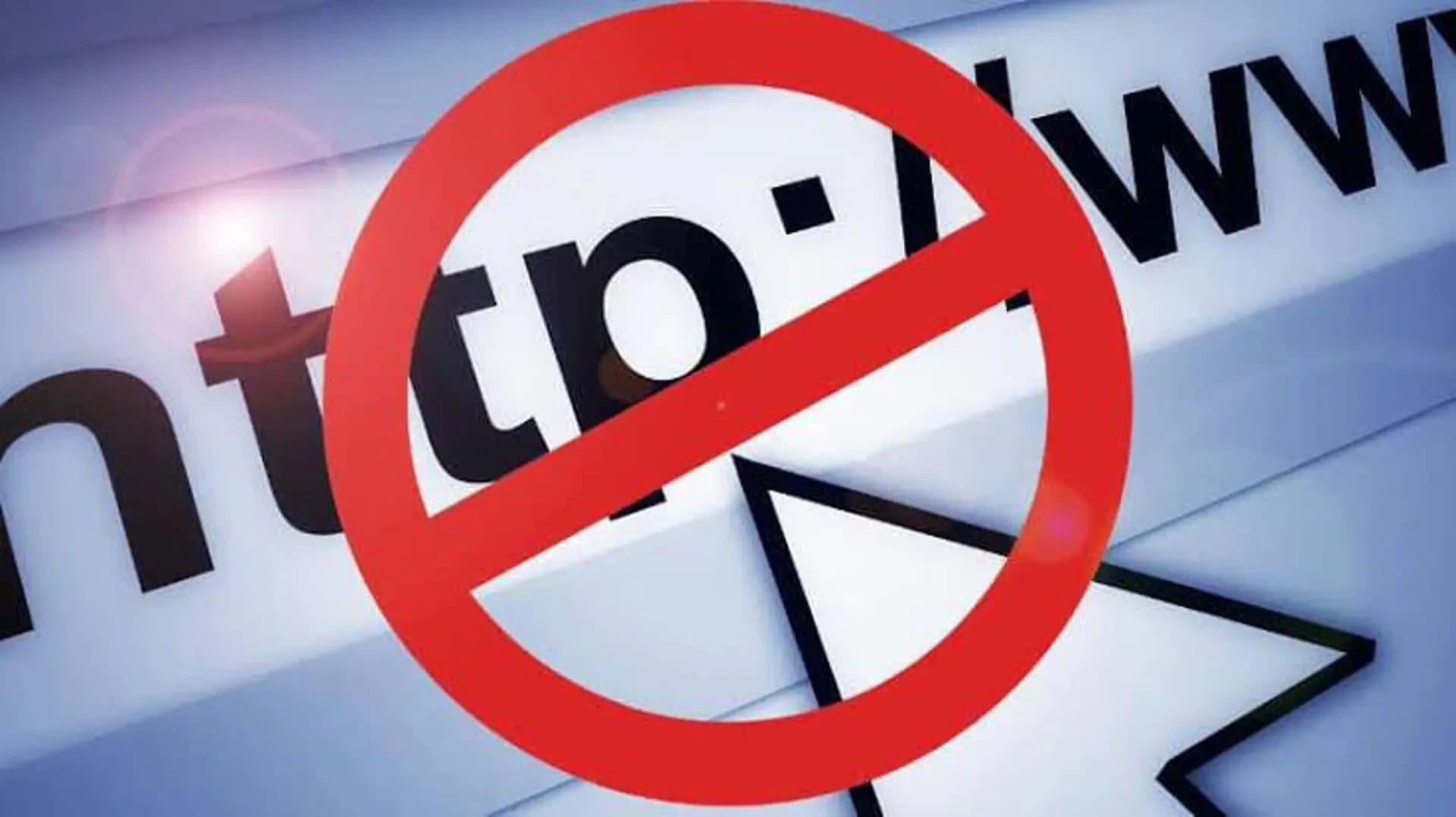
With the blocking of access to Instagram, which is popular all over the world and has nearly 60 million users in our country, many people have begun to wonder about the nature of the access-blocking institution. Although the power to block access to websites and to the content shared on them is a manifestation of the state's right of sovereignty, it stands on a fine line between the public interest and individual rights and freedoms, because it restricts freedom of expression. Indeed, all restrictions imposed by the state in the public interest simultaneously restrict the rights and freedoms of individuals. In this sense, access blocking must also be carried out in accordance with the law and used in line with its purpose. In this article, we will inform you about the nature, purpose and conditions of the access-blocking institution.
Introduction
With the blocking of access to Instagram, which is popular all over the world and has nearly 60 million users in our country, many people have begun to wonder about the nature of the access-blocking institution. Although the power to block access to websites and to the content shared on them is a manifestation of the state's right of sovereignty, it stands on a fine line between the public interest and individual rights and freedoms, because it restricts freedom of expression. Indeed, all restrictions imposed by the state in the public interest simultaneously restrict the rights and freedoms of individuals. In this sense, access blocking must also be carried out in accordance with the law and used in line with its purpose. In this article, we will inform you about the nature, purpose and conditions of the access-blocking institution.
What Is the Purpose of Our Article?
As in all states of the world that hold the right of sovereignty, in our country too, many different internet environments have on many occasions been restricted and blocked on grounds of a social nature such as the public interest. The access bans imposed on Twitter on 6 April 2015, on Wikipedia on 29 April 2017 and on YouTube on various dates are only a few of the access bans that have been applied in our country.
After access to Instagram, which has nearly 60 million users in our country, was blocked on 2 August 2024 by decision No. 490.05.01.2024.-608903 of the Information Technologies Authority (Bilgi Teknolojileri Kurumu), the nature and conditions of the access-blocking institution came back onto the agenda and became a matter of curiosity for many people.
What Is an Access Ban?
The institution of access blocking is regulated within the scope of Law No. 5651 on the Regulation of Publications Made on the Internet and Combating Crimes Committed Through Such Publications. In Article 2 of the Law, titled “Definitions”, access is defined as “gaining the opportunity to use an internet environment by connecting to it”. In this sense, it would be correct to define access blocking as preventing the gaining of the opportunity to use an internet environment by connecting to it, and as restricting entry into the internet environment in question. Indeed, with the access ban imposed by the Information Technologies Authority on 2 August 2024, people's access to the social media application Instagram was restricted. In view of the requirement that all decisions of the administration be reasoned, the fact that no reasons were given in decision No. 490.05.01.2024.-608903 of the Information Technologies Authority imposing the access ban on Instagram prevents us from explaining on which of the grounds we will set out below the access ban on Instagram was based.
Why Is an Access Ban Imposed?
Considering the state's obligation to protect the public interest, it is clear that the state's power to impose an access ban is at the same time an obligation. However, as in all the means that it uses for the benefit of society, the state must be proportionate when using its power to block access and must not cast aside all individual freedoms in the name of securing the public interest. At the same time, as in all states governed by the rule of law, the state must also be bound by laws and other relevant legislation with regard to access blocking. So how are the conditions for an access ban regulated in Turkish legislation?
Conditions for Imposing an Access Ban
The conditions for imposing an access ban are regulated in Article 8 et seq. of Law No. 5651 on the Regulation of Publications Made on the Internet and Combating Crimes Committed Through Such Publications. An access-blocking decision is in principle given by a judge’s decision during the investigation phase and by a court decision during the prosecution phase. However, in cases where delay would be prejudicial, the Law has authorised the public prosecutor and also the President of the Information Technologies Authority in respect of access blocking.
Where there is sufficient suspicion that the offences enumerated in the catalogue in Article 8 of the Law have been committed in respect of content in the internet environment, a decision is made to remove the content or to block access. The decision to remove content and block access can be applied only where the offences enumerated in the catalogue in the Law are concerned. These offences are;
Encouraging suicide
Sexual abuse of children
Facilitating the use of narcotic or stimulant substances
Supplying substances dangerous to health
Obscenity
Prostitution
Providing a place and means for gambling
The offences included in the Law on Crimes Committed Against Atatürk
The offences included in the Law on the Regulation of Betting and Games of Chance in Football and Other Sports Competitions
The offences included in the first and second paragraphs of Article 27 of the Law on State Intelligence Services and the National Intelligence Organisation
Although it is provided that the access-blocking decision is in principle given by a judge or a court decision, paragraph 4 of the same article provides that, where there is sufficient suspicion that the offences in question have been committed in publications made in the internet environment, the decision to remove content or to block access may also be given ex officio by the President of the Information Technologies Authority.
Article 8/A of the Law regulates the removal of content and the blocking of access in cases where delay would be prejudicial. Accordingly;
Protection of the right to life and of the safety of life and property of persons
Protection of national security and public order
Prevention of the commission of an offence
Protection of public health
where one or more of these grounds exist, a decision to remove content or to block access may be given by the President of the Information Technologies Authority upon the request of a judge, the President of the Republic or the relevant ministries. In this case, however, the decision to remove content or to block access given by the Information Technologies Authority must be submitted to the approval of the criminal judge of peace within 24 hours. The judge announces his or her decision within 48 hours; otherwise, the decision to remove content or to block access is automatically lifted.
The Access Ban Imposed on Instagram
Although the access ban imposed on Instagram on 2 August 2024 has been lifted as of now, the lawfulness of that decision needs to be examined and discussed. In decision No. 490.05.01.2024.-608903 of the Information Technologies Authority imposing the access ban on Instagram, it was not announced to the public on account of which of the offences and situations set out in the catalogue of the Law, explained above, the decision to block access was given. Besides the principle that all acts of the administration must be reasoned, it is also legally correct for the decision to be presented to the public with its reasons, in order to ensure that the decisions given by the administration can be reviewed. Yet, in the access-blocking measure imposed on Instagram, let alone which of the catalogue offences listed in the Law it was imposed on account of, even which provision of the Law was relied on remains unknown.
Information on access-blocking decisions and on which criminal judgeship of peace the decisions were submitted to for approval can be obtained from the query screen on the website of the Information Technologies Authority. Given the requirement that an access-blocking decision given ex officio by the Information Technologies Authority be submitted to the approval of the criminal judge of peace within 24 hours, there is no information in the content of decision No. 490.05.01.2024.-608903 imposing the access ban on Instagram as to which criminal judgeship of peace approved the decision. Considering the requirement that decisions given by the administration be reviewable, although all of the procedural steps should also be shared with the public, the fact that the information that should be shared with the public is not fully included in decision No. 490.05.01.2024.-608903 blocking access to Instagram constitutes a deficiency.
Conclusion
Access bans frequently conflict with Article 10 of the European Convention on Human Rights, titled “Freedom of Expression”, which provides: “Everyone has the right to freedom of expression. This right shall include freedom to hold opinions and to receive and impart information and ideas without interference by public authority and regardless of frontiers. This Article shall not prevent States from requiring the licensing of broadcasting, television or cinema enterprises.” Indeed, blocking access on the ground of the public interest, on the other hand, restricts individuals' ability to obtain information through the internet environment whose access is blocked and to exercise freedom of thought through that environment.
It is clear that the decision to block access lies on a very fine line between the violation of freedom of expression and the public interest. What needs to be done in this case is to inform the public sufficiently that the decision to block access is necessary in the public interest. Indeed, after the blocking of access to Wikipedia on 26 December 2019, the matter was brought before the Constitutional Court, and in interim ruling no. 82 of the decision dated 26/12/2019 and numbered 2017/22355, it was held: “In order not to impair the freedom to receive and impart information, an interference by way of blocking access to the content on Wikipedia must be shown, with a relevant and sufficient justification, to be necessary in a democratic society.” The Constitutional Court's position on the access-blocking decision being necessary for the public interest and on the decision being given with reasons is clear.
In conclusion, although an access-blocking decision is in some cases necessary in the interest of society, like all decisions to be given by the Administration, an access-blocking decision must also be proportionate to its purpose and its reasons must be shared sufficiently with the public. At the same time, the Administration must comply fully with the principles of the rule of law and the supremacy of laws and must complete the procedural steps specified in the Law without omission. Otherwise, the decision given will be contrary to law and procedure, and the principle of the rule of law will be seriously damaged.
In this article, we have given a brief overview of the nature of the access-blocking institution, which has recently been the subject of much curiosity with the blocking of access to Instagram, and of the way in which it is regulated in Turkish law.
Attorney at Law Utku Mehmet Yetiş