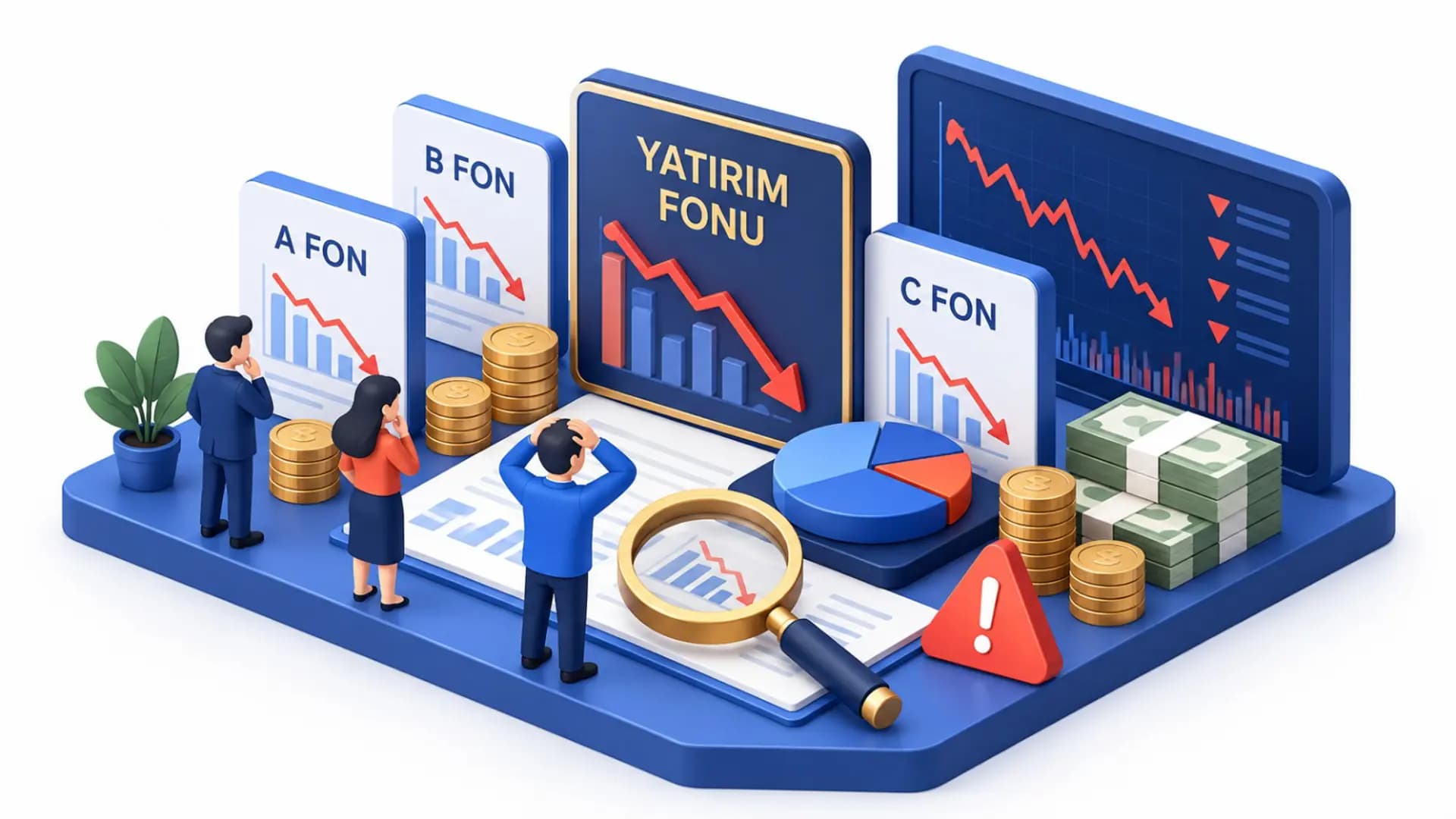

Writing “Ad” on Social Media Is No Longer Enough!
If you obtain a benefit in return for sharing a product you like on social media, you can no longer conceal it. Advertising rules in Türkiye have changed: the label “advertisement” is now mandatory for influencers, targeted advertising aimed at children has been banned, and advertisements created with artificial intelligence must now be clearly disclosed. So what happens if these rules are not followed? We explain the details in our article.
Read more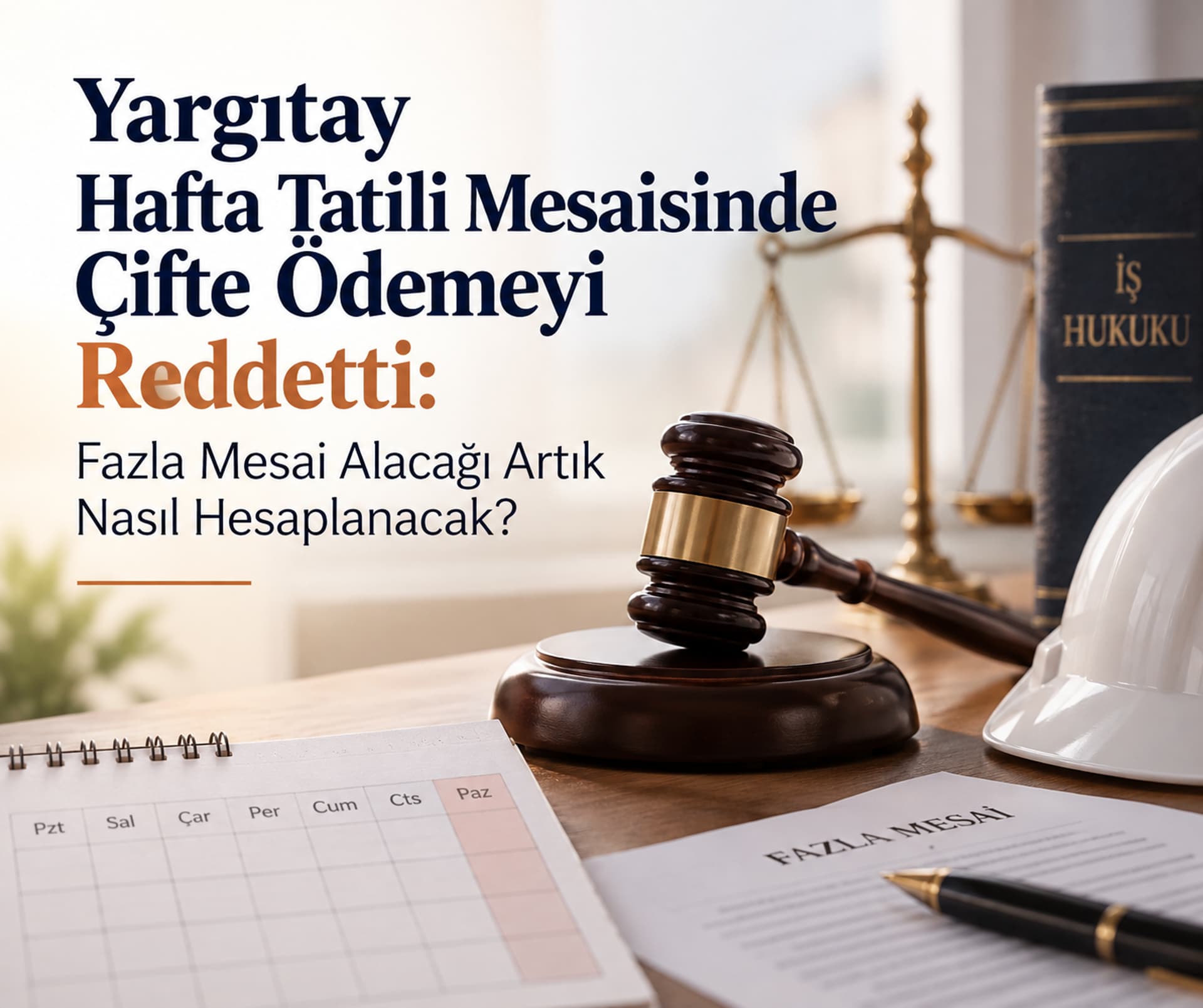
Court of Cassation Rejects Double Payment for Work on Weekly Rest Days: How Will Overtime Receivables Now Be Calculated?
Were you made to work on a Sunday or on your weekly rest day? A new Court of Cassation (Yargıtay) decision has clarified the method for calculating overtime receivables. So does this reduce the money you receive, or does it merely change the way it is calculated? The answer is in our article.
Read more
A New Era in Partial Actions: The Action for an Indeterminate Claim Abolished and the Procedural Regime Restructured
This article addresses the legal nature of the partial action under the Code of Civil Procedure (HMK), the conditions for bringing it and its limits in practice. It assesses the differences between the partial action, which is resorted to where the amount or value of the claim cannot be expected to be determined fully and precisely or where doing so is impossible, and the action for an indeterminate claim. It also explains the effect of bringing a partial action on limitation periods and preclusive periods, the principle that the limitation period is interrupted only in respect of the amount sued for, and the procedural details that require attention in light of the current case law of the Court of Cassation (Yargıtay).
Read more
Constitutional Court Annuls Indefinite Poverty Alimony: What Happens in Ongoing Proceedings?
This article addresses the annulment, by the Constitutional Court's decision dated 4 June 2026, File No. 2026/14, Decision No. 2026/88, of the phrase “for an indefinite period” (“süresiz olarak”) in Article 175 of the Turkish Civil Code, and the legal consequences of that decision for poverty alimony. Because the annulment will enter into force after 9 months, it assesses the status of existing maintenance obligations during this period, the fate of finalised maintenance judgments, the effect on pending divorce cases, the continuation of child maintenance (iştirak nafakası) irrespective of the decision, and the time-limited and graduated maintenance model that may come onto the agenda with the new regulation expected from the Grand National Assembly of Türkiye (TBMM). It also explains the legal balance the decision sets out within the scope of the principle of proportionality and the right to property, and that the erroneous claims that “maintenance has been completely abolished” have no legal basis.
Read more
Amendment to the Regulation on Commercial Advertising and Unfair Commercial Practices: A New Era in E-Commerce and Digital Marketing
The “Regulation Amending the Regulation on Commercial Advertising and Unfair Commercial Practices”, published in Official Gazette No. 33297 of 1 July 2026 (OG: 01.07.2026, No. 33297), has made comprehensive amendments to the Regulation on Commercial Advertising and Unfair Commercial Practices published in Official Gazette No. 29232 of 10 January 2015. The Amending Regulation entered into force on 1 August 2026. The regulation has significant consequences, particularly for e-commerce and digital marketing, ranging from discount sale advertisements to environmental claims, from the use of artificial intelligence to social media influencers, and from targeted advertising to consumer reviews. In this article, the amendments are addressed article by article, together with their effects in practice.
Read more
Company Formation in Dubai: Mainland or Freezone?
The first and most decisive decision facing investors planning to operate in Dubai is whether the company will be established under a mainland (onshore) or a freezone structure. Until now, the main factor shaping this choice was the ownership structure; however, with the regulations the United Arab Emirates has introduced in recent years, 100% FOREIGN OWNERSHIP has become possible in both structures for most activities. This development has largely removed the ownership factor from the picture of choice; it has shifted the factors that determine the decision to commercial reality, that is, where income will be earned, the subject of the activity, the tax regime and operating cost.
Read more
Disclosure of Doping Sanctions and the Protection of Personal Data: The NADA Austria Decision of the Court of Justice of the European Union
In this article, the Court of Justice of the European Union (CJEU), with its "NADA Austria" decision dated 14 July 2026, struck a historic balance at the intersection of sports law and data protection (GDPR). Although the Court found the online disclosure of the names and violations of professional athletes who have received doping sanctions to be lawful in principle, it declared the indefinite retention of such publications beyond the duration of the sanction to be contrary to fundamental rights and disproportionate. By requiring anti-doping bodies to carry out a separate balancing of interests for each athlete instead of automatic disclosure, and to limit the duration of publication to the duration of the sanction, this decision also offers a critical point of reference for practices in Türkiye under the KVKK.
Read more
The 12th Judicial Package Has Been Enacted: How Will It Affect Our Lives?
On 16 July 2026, the Grand National Assembly of Türkiye (TBMM) adopted the bill publicly known as the “12th Judicial Package”. This package is not a remote legal debate; it brings a series of changes that directly touch daily life, from the house you inherit to your bank account, from the receivable claim you file to your hearing calendar. So what has changed for ordinary citizens? Let us explain.
Read more
Constitutional Court's Critical Ruling on Personal Data Offences: Complaints Will No Longer Be Required
This article addresses the Constitutional Court's constitutional assessment, in its decision of 16 April 2026 (Docket No. E.2026/34, Decision No. K.2026/81), of the investigation of the offences of unlawfully disclosing, disseminating or obtaining personal data without the need for a complaint. In its decision, the Court emphasised that these offences concern not only individual interests but also public order and society's trust in the protection of personal data, and concluded that the ex officio investigation procedure is in conformity with the Constitution. The article also evaluates the effects of the decision on criminal law practice, the legal consequences it may have for data controllers and companies, and the obligations arising in terms of KVKK compliance processes, and examines from a practical perspective the new approach to be followed in criminal investigations concerning personal data breaches.
Read more
48 hours to justice: Cas’s world cup ad hoc division and the balogun red card controversy
The Ad Hoc Division of the Court of Arbitration for Sport (CAS), established almost as if it were set up directly on the field, has been created to render binding decisions within 48 hours on urgent disputes connected with the tournament throughout the period commencing on 11 June and ending on 19 July. This mechanism has once again come to the forefront following a recent concrete incident: the controversy surrounding the possible challenge to the red card shown to United States national team striker Folarin Balogun in the match against Bosnia and Herzegovina. This article addresses both the functioning of CAS’s special arbitral system and the limits of that system through current examples.
Read more
Justice in 48 Hours: The CAS Ad Hoc Division at the World Cup and the Balogun Red Card Debate
The Ad Hoc Division of the Court of Arbitration for Sport (CAS), set up virtually on the pitch itself, has been established to issue binding decisions within 48 hours on urgent disputes connected with the tournament, which began on 11 June and will end on 19 July. This mechanism has come back onto the agenda with the debate over an appeal following a concrete incident last week, the red card shown to Folarin Balogun, the striker of the US national team, in the match against Bosnia and Herzegovina. This article examines, through current examples, both how the special arbitration system of the CAS operates and the limits of that system.
Read more