This content has been translated from the original text.
Did you have your vehicle repaired after an accident but forget to claim for the loss in its value? A damage history reduces your vehicle's second-hand market value, and this difference is a right that can be claimed under insurance. •What is diminished vehicle value? •Who can claim it? •Which avenues are available? •What is the limitation period? We explain all the details in this week's article. You can read it via the link in our profile.
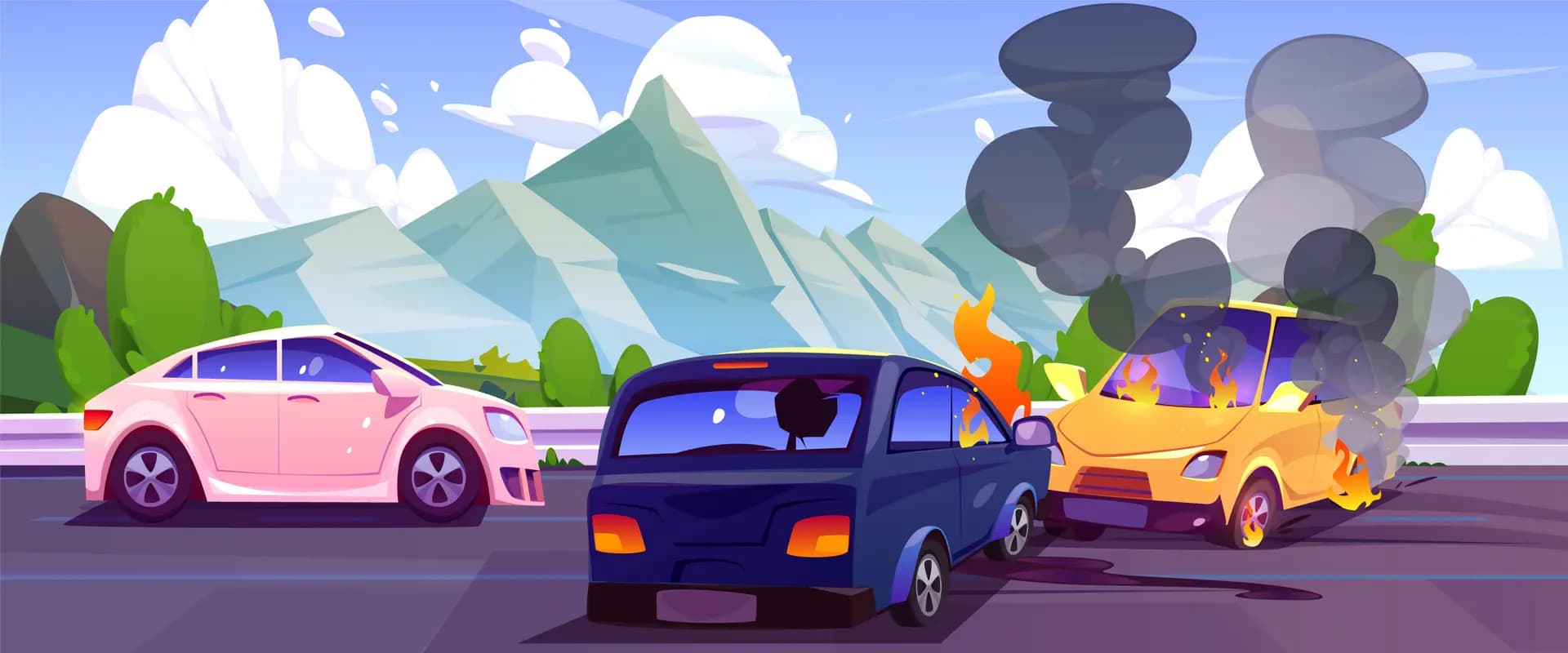
Traffic accidents can result not only in physical damage but also in economic loss. One such economic loss is “diminished vehicle value” (araç değer kaybı), which many vehicle owners are unaware of or do not know how to claim. Although a vehicle repaired after an accident may appear to have been restored to its former condition, its market value falls because on the second-hand market it is now regarded as a “vehicle with a damage history”. This reduction in value, that is, the diminished value of the vehicle, is a loss that can be claimed through legal channels.
Diminished vehicle value is a type of compensation that may be claimed by the party who was not at fault, or who was only partially at fault, in the accident. This compensation can be claimed directly from the traffic insurer of the party that caused the accident. The key point is that the claim for diminished value is a right belonging to the vehicle owner; therefore, where the person driving the vehicle differs from the registered owner, the right to claim belongs to the registered owner. It is also possible to claim diminished value for both private and commercial vehicles.
In order to claim diminished value, the accident must have been documented by an official report and the repair of the vehicle must have been completed. At this stage, the vehicle whose damage has been repaired must be examined by experts, and the loss in value must be determined by an expert report. A frequent mistake in practice is to assume that this process can be resolved only through comprehensive (kasko) insurance. However, comprehensive insurance does not cover diminished value; this loss is compensated only under the other party's traffic insurance.
When applying to the insurance company, the accident report, the vehicle registration certificate, repair invoices, photographs of the damage and the appraisal report showing the diminished value must be submitted. After the application, the insurance company is expected to make payment within 15 days. If no payment has been made by the end of this period, it is possible to apply to the Insurance Arbitration Commission (Sigorta Tahkim Komisyonu). The arbitration route is concluded more quickly than court proceedings, and the application costs are quite low. However, vehicle owners who wish to do so may also bring an action against the insurance company. That said, the court process may take longer than arbitration and may involve additional costs such as court fees and expert witness expenses. In addition, recourse to mediation is mandatory as a condition for bringing an action before filing a lawsuit. For this reason, many vehicle owners prefer to apply first to arbitration.
On the other hand, in some cases the diminished value of a vehicle may exceed the coverage limit set under the insurance policy. As of 2025, the coverage limit for material damage under compulsory traffic insurance is applied as TRY 300,000 per vehicle and TRY 600,000 per accident. Taking into account the number of vehicles involved in the accident and the amount of the loss, these limits may at times prove insufficient. In such cases, a claim may also be made directly against the person who caused the accident for the portion not covered by the compensation paid by the insurance company. Since the driver at fault bears personal liability under the Turkish Code of Obligations (TCO), the injured vehicle owner also has the right to bring a direct compensation action for the remaining loss.
Another point to bear in mind when claiming diminished value is the limitation period. Claims relating to diminished vehicle value become time-barred two years from the date on which the injured party learned of the loss and of the person liable for compensation, and in any event ten years from the date of the accident. For this reason, exercising the right to compensation within the time limit after the accident is of great importance; otherwise, the possibility of making a claim in law may be lost.
Furthermore, assessments may be made to the effect that no diminished value will be paid for damage recurring on parts that have previously been replaced, repaired or otherwise treated. This is because the earlier repair history of the part is taken into account when calculating diminished value, and where a part that has already suffered a loss in value is damaged again, it is accepted that no additional loss arises. The vehicle's damage history is therefore an important factor that directly affects the amount of the diminished value compensation.
If the vehicle is a total loss (pert), that is, fully damaged, a claim for diminished value cannot be made because the vehicle's market value has been entirely eliminated. On the other hand, diminished value compensation can also be obtained for second-hand or high-mileage vehicles; only the amount of compensation varies according to the vehicle's age, mileage and previous damage history.
In conclusion, vehicle owners who were not at fault, or were only partially at fault, in a traffic accident have the right to claim the diminished value of their vehicles. However, it is of great importance that this process be carried out properly, completely and in good time. Otherwise, rights may be lost. For this reason, after an accident it is advisable not to settle merely for repairing the damage, but also to seek legal support and pursue one's material rights.