
Entering the UAE Market: Frequently Asked Questions
Setting Up a Company in Dubai: Permits, Licences, Work Permits and General Assessment, Permits and Licences Required for the Company to Begin Lawful Operations, and the Licence Renewal Process
Read more
Frequently Asked Questions on Taxation in the UAE
This week's topic in our series offering guidance on the process of setting up a company in Dubai is taxes. In this week's article, in which we cover the tax structure in the United Arab Emirates (UAE), Corporate Tax, Value Added Tax and the advantages in free zones, we aim to help you optimise your business's operations in the UAE by providing up-to-date information on e-commerce procedures, import restrictions and tax compliance. For more, you can look at the articles from previous weeks and follow the weeks to come!
Read more
Frequently Asked Questions About Setting Up a Company in Dubai, UAE
In last week's article, we mentioned that in recent years Dubai has become a shared destination for many investors from the global business world. This week, we have prepared a question-and-answer article containing the basic information on the process of setting up a company in Dubai, UAE. Covering stages such as company formation, business plan preparation, legal documents, company name and licensing, the article provides details on mainland, free zone and offshore company types in Dubai and explains the advantages and disadvantages of each. This article serves as a legal guide for investors who wish to understand the process of setting up a business in Dubai and to proceed effectively.
Read more
An Overview of What You Need to Know About Dubai
At DG Legal, with our new operations in Dubai, we are launching a series of articles in which we will examine investment and living opportunities in depth. In this series, we will address in detail critical topics such as the company formation process in Dubai, property rights, tax regulations, real estate acquisition and residence permits. Stay tuned to learn more about the unique opportunities and the legal infrastructure that Dubai has to offer.
Read more
Amendments to the Union of Turkish Bar Associations' Regulation on the Prohibition of Advertising
The Regulation Amending the Union of Turkish Bar Associations' Regulation on the Prohibition of Advertising was published in the Official Gazette No. 326227 dated 09.08.2024, and with the amendment the scope of the prohibitions has been considerably widened. In this article, the amendments and new provisions are addressed on a comparative basis, together with the individual provisions of each article. Foremost among the amendments are: detailed prohibitions on meeting venues and law offices; the rule that more than one signboard cannot be used at a law office; the abolition of the previously existing procedure of sending a warning letter in the event of a breach of the Regulation; the emphasis placed on professional identity and private life; new and comprehensive restrictions on the use of social media; and the possibility that failing to end an act that violates the advertising prohibition may be treated as a repeat offence.
Read more
The Dirtiest Race in History
The 1500 metres final run at the 2012 London Olympics is remembered as one of the “dirtiest” races in history. In this race, in which six of the nine athletes were disqualified for doping, the medal rankings changed years later. So why was the 10-year ban from sport imposed on the Russian athlete Tatyana Tomashova, announced by the Court of Arbitration for Sport (CAS) on 3 September 2024? Should responsibility for this scandal, in which more than half of the competing athletes were found to have used doping, be limited to the athletes alone? You can find the details in our article at the link below.
Read more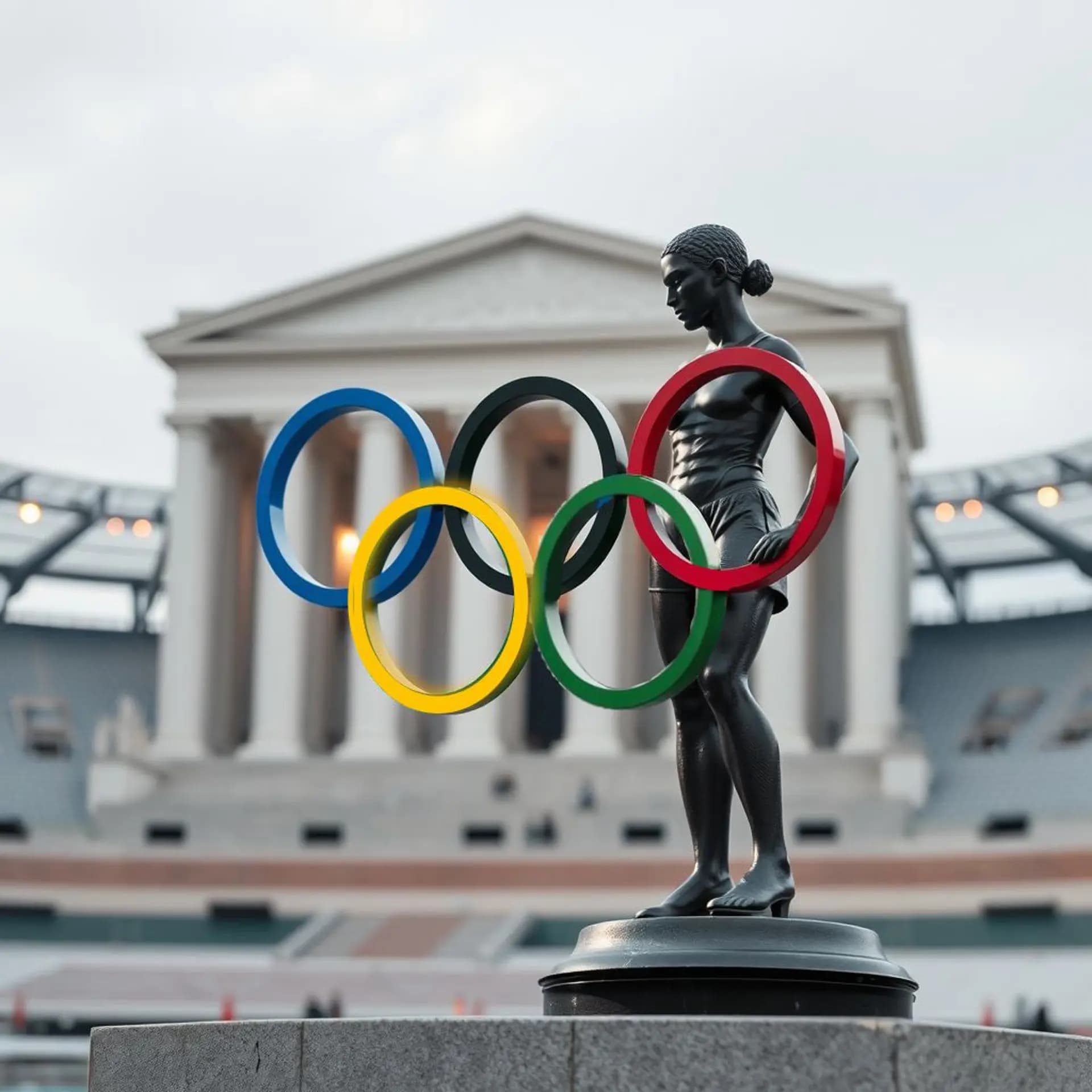
A Legal Analysis of CAS Arbitration at the Olympic Games in Light of Recent Events
The Olympic Games, the largest international event in sport, can give rise to many legal issues for athletes, organisers and all parties concerned. This article addresses the critical role of the Court of Arbitration for Sport (CAS) in these processes and, in light of recent events at the 2024 Paris Olympics, emphasises the influence of CAS on fair decision-making and its importance in safeguarding the universal values of sport. You can find the detailed analysis in the article!
Read more
Could Instagram Be Blocked Again?
With the blocking of access to Instagram, which is popular all over the world and has nearly 60 million users in our country, many people have begun to wonder about the nature of the access-blocking institution. Although the power to block access to websites and to the content shared on them is a manifestation of the state's right of sovereignty, it stands on a fine line between the public interest and individual rights and freedoms, because it restricts freedom of expression. Indeed, all restrictions imposed by the state in the public interest simultaneously restrict the rights and freedoms of individuals. In this sense, access blocking must also be carried out in accordance with the law and used in line with its purpose. In this article, we will inform you about the nature, purpose and conditions of the access-blocking institution.
Read more
Cybersecurity and E-Commerce
The rapid growth and spread of e-commerce has brought with it significant cybersecurity risks. Threats such as cyber-attacks, data breaches, identity theft and fraud pose a major danger to e-commerce platforms. These threats not only damage the reputation of businesses but can also shake consumers' trust and lead to economic losses. Therefore, taking effective cybersecurity measures is unavoidable in order for e-commerce to be sustained safely. In this article, we will set out for you the security measures required for e-commerce to be sustained safely and the foundations of this subject.
Read more
The Right to Compensation for Flight Delays
Today, air transport has become one of the fastest and most widespread ways to travel. However, unexpected situations such as flight delays can disrupt travel plans and cause passengers a variety of difficulties. Fortunately, both national and international regulations safeguard passengers' right to compensation in the event of flight delays. In this article, we provide information on the rights that passengers have in the delays that frequently occur in air transport.
Read more
Lawfulness of the Processing of Republic of Türkiye Identity Card Data by Private Security Officers at the Entrances of Residential Complexes, Residential Buildings and Office Towers
In Türkiye, the collection and processing of identity card information for security purposes by various institutions and businesses, particularly in shopping centres, residential complexes and office towers, is a widespread practice. In some places, it is even seen that an identity card is taken from the visitor and an entry card is given in exchange, and that the visitor's signature is also taken in a ledger in which the identity information is recorded. However, it is important to assess this practice, which is carried out unlawfully, from the standpoint of the protection of personal data. In this article, the lawfulness of the processing of Republic of Türkiye identity card data by private security officers at the entrances of residential complexes, residential buildings or office towers will be examined and assessed.
Read more
Points to Note on Non-Competition Obligations in Employment Law
It is of great importance for businesses to draw up non-competition agreements or to include provisions addressing unfair competition in the contracts they conclude. Through a non-competition agreement signed between the parties, unfair competition can be prevented by an undertaking not to enter into a competitive relationship with the employer within a specific field of activity, in a specific geographical area and within a specific period of time. In the event of non-performance of these undertakings, a contractual penalty may be stipulated and the employer's loss may also be compensated. In this article, we set out the points to be observed so that, while the employer's legitimate interest is protected through a non-competition agreement, the employee's freedom to work and freedom of contract, which are constitutional rights, are not restricted.
Read more